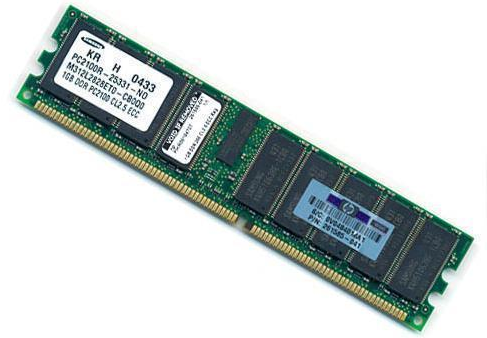
The error correcting memory is the memory system that tests and corrects errors by itself without the operating system or users being aware of the correction. The data will be written into the memory then the circuitry will generate checksums from the binary sequences then storing them in an extra eight bits for 64-bit paths or seven bits of memory for the 32-bit data paths. The checksum will be recomputed when data are retrieved from the memory to determine if the data bits have been corrupted. The system can detect and correct errors automatically by one pit per word but cannot correct errors larger than one bit.
The ECC is a method used during the transmission or storage of data. There are several types of Random Access Memory (RAM) chips in the computer that utilizes such strategy to correct data errors called the ECC memory. Normally they are used in serves instead of in clients’ computers. In fact, errors of the memory are incomplete to the RAM amount and the operation duration of a computer. As servers often have more than one RAM gigabytes and will operate 24 hours a day, the possibility of errors popping up in the chips is fairly higher hence the need of such memory.
There are two types of memory errors; the soft and hard. Hard errors are usually caused by the fabrication deficiencies in the memory chip and cannot be detected even when they begin to appear. Soft errors are primarily caused by electrical troubles. Errors that are not detected early could make your computer prone to a crash, therefore, the need of using the error correcting memory. Most errors have greater relevance to servers than the home or office computers. The crashing of server will not affect other computers although it is connected to a common network but when a client computer crashes, it will make the entire network down.
So generally, the ECC memory is advisable for the servers but not necessarily needed for clients if their computers are used for critical applications. Usually the memory chips apply the Hamming Code or Triple Modular Redundancy for the error detection and correction. In other words, they are called the Forward Error Correction codes that cope with the error correction by its own instead of returning to ask for the data source before sending back the data.